2025
University Library Maastricht
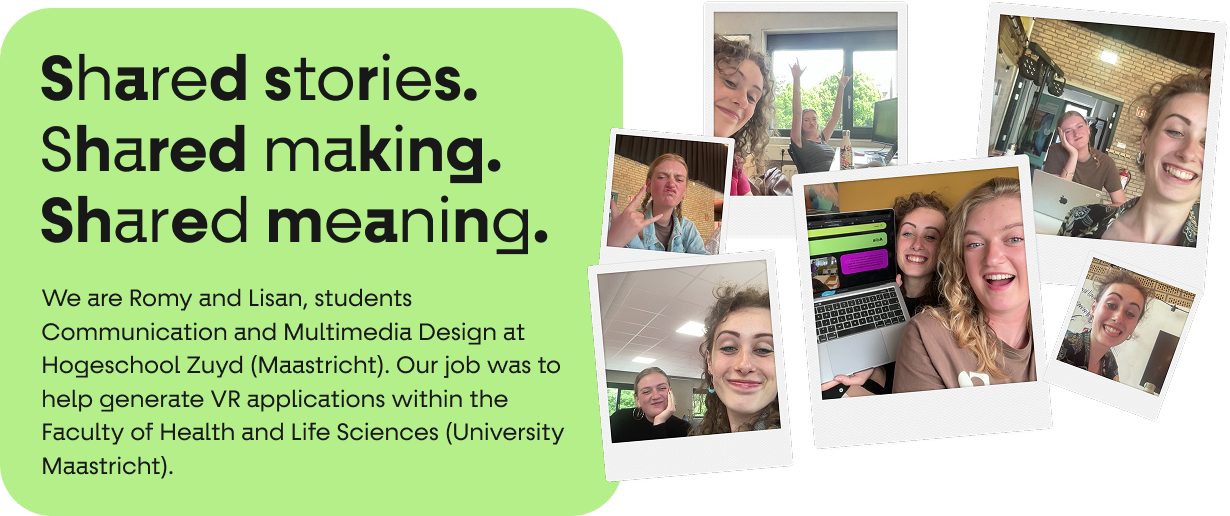
Lisan Stoffels (designer/developer) and me (designer/editor)
We bundled stories from students about VR and refined them into clear, corrected
narratives. Through
interviews, quick VR try-outs, and drawing exercises, we captured their ideas and turned them into
concise stories that show why VR can matter in education.
We started with a question from the University Library: How can we combine VR and wellbeing?Through co-creation sessions with students, we realized that VR and wellbeing is a complex combination. Many initial ideas suggested obvious or “fun” approaches, but in practice, VR isn’t always suitable for wellbeing.
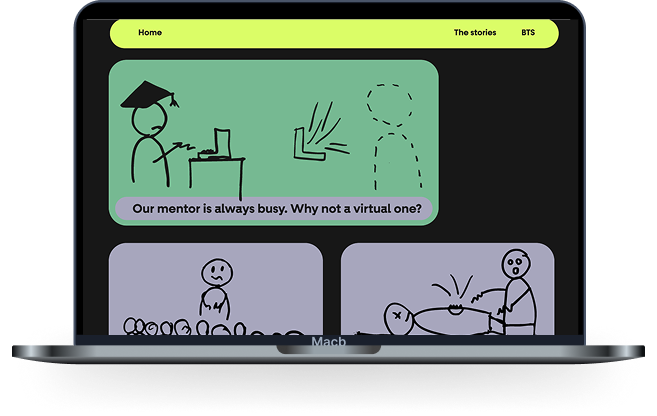
A curated website that bundles four student stories about what VR could do in there education.
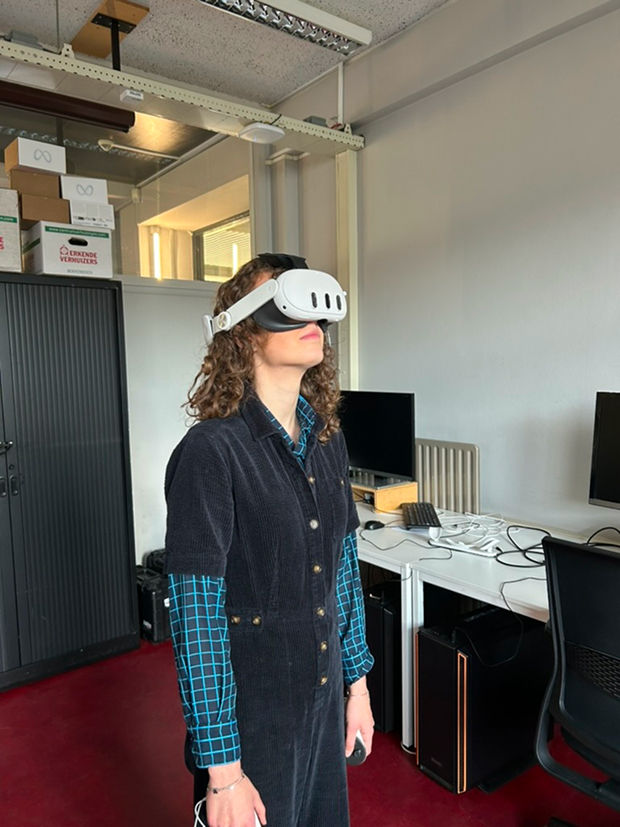
Our VR experiences were very minimal; we had only put on a VR headset once or twice. Step 1 was getting familiar with VR, through the headsets we have at school. One day, we went to the VR lab by ourselves and tried out various things. Like the meditation app TRIPP: we were completely alone in the room with no sounds, which allowed us to fully immerse ourselves in the app. Or beatsaber: getting our daily exercise by slashing blocks to the rythm of a song. Some games were clearly fun, but some didn’t work or weren’t successful. That did cause some frustration.
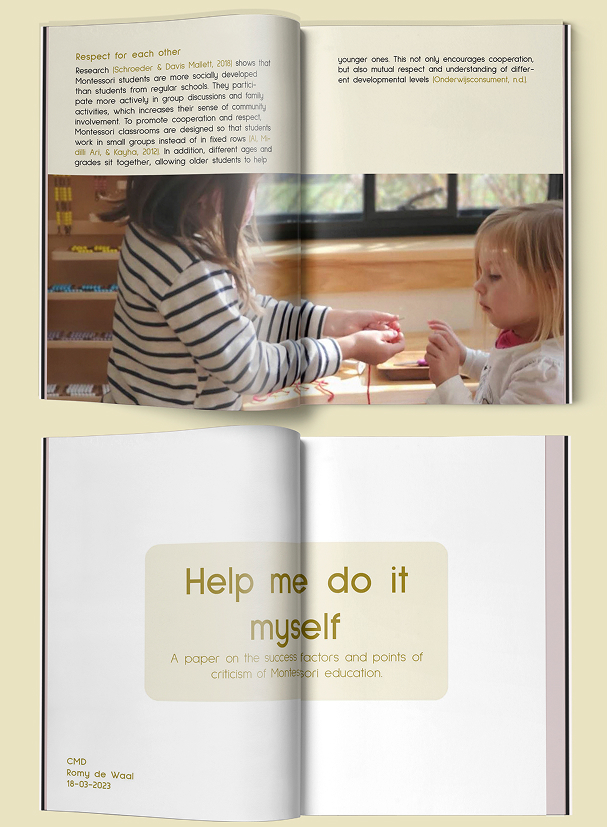
As part of my academic work, I studied Montessori education and discovered how it encourages independence, curiosity, and collaboration. I discovered how valuable this approach to learning can be. It allows students to explore at their own pace, fostering independence, curiosity, and collaboration. What inspired me most is how these principles can be applied more broadly in higher education, where encouraging curiosity and focusing on people’s strengths can lead to greater motivation and joy.
What followed was a period full of ups and downs. It was very valuable for my learning process, but in the moment it was quite stressful. I sometimes found it difficult to work on the project, because there were so many different paths to explore. I find it hard to write down our process because it goes in so many different directions. We tried a bit of everything and had conversations with various people. Many had different opinions and ideas, which is logical. The designer’s task is to summarize all those ideas into one final design. Maybe I was afraid of making mistakes; you don’t want to forget anything, so maybe that’s why you end up doing nothing at all.
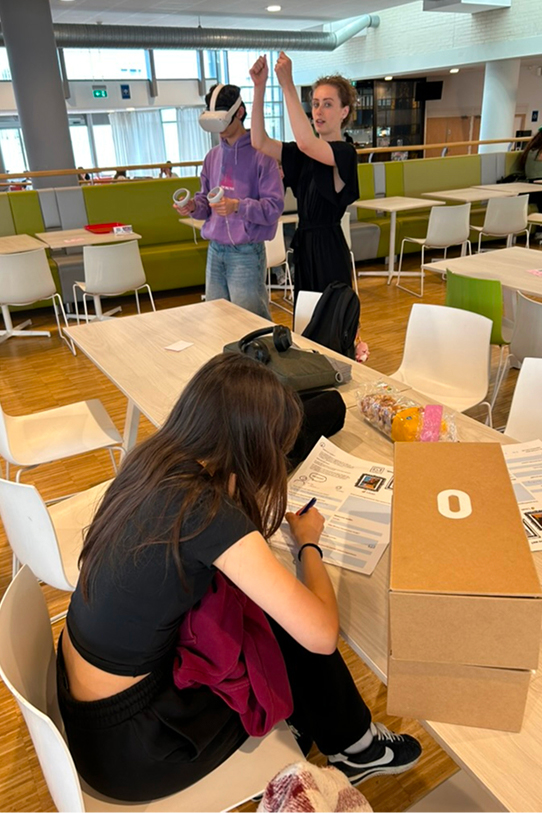
We interviewed three FHML students who already had some experience with VR. Their reaction wasn’t very enthusiastic (read: 🙄). The apps they had tested in class often missed the mark, and students tend to be brutally honest about that. But that actually gave us more motivation: it can be done better. VR cán be meaningful in education - but only if it’s done right. We chose to involve students very closely, by having them give their opinions via co-creation. It took a few weeks to perfect, and the first session was far from perfect, but with some hard work we managed to get there in the end. And we had a lot of fun during the process!
A co-creation session is a gathering where different participants brainstorm ideas and solutions together. The process is all about equal collaboration, with everyone’s unique perspective taking center stage. No prior experience with VR was needed. Although if you had some, that was a nice bonus! We started by asking a few short questions about VR, then gave everyone the chance to get familiar with the headset. After that, participants tried out several applications we had prepared. We ended the session with a short brainstorm and a conversation about everyone's experience.
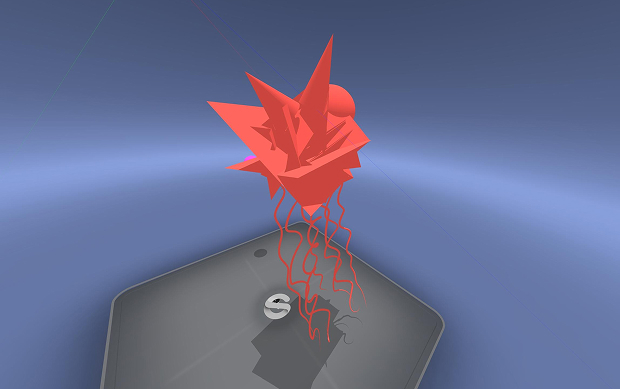
We wanted to think with students how VR could improve their least favorite course. They came up with three concepts to make the subject more engaging, immersive, or easier to understand.Some questions we used to guide this: What could users see, hear, or feel? Should the VR experience be solo or collaborative? What would the ideal VR learning environment look like?
Before we started this project, we had no idea what our end product would be. As we got further into the project, we understood more and more what we wanted. It needed to be simple—the students’ stories are the most important part. We just needed to create something where they could be written.
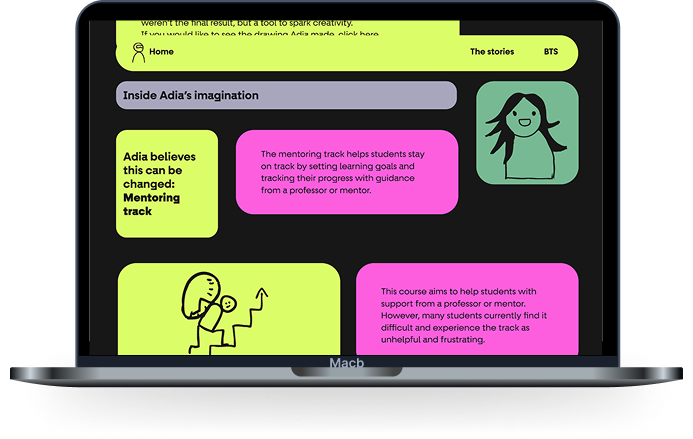
To keep the story consistent and clear, I gathered all the drawings and sketches the students made and created new, clearer sketches to accompany the stories they told us
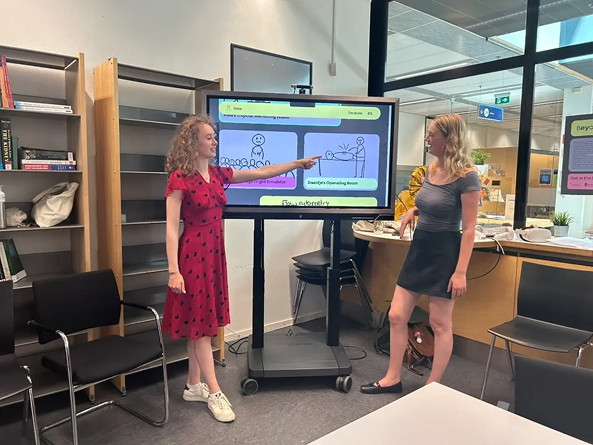
To conclude the project, we held an exhibition at the University Library in Maastricht. The exhibition itself was a lot of fun, and it felt great to share our story with the UM staff. They all really enjoyed it and showed genuine interest. That gave us an amazing feeling, because the project wouldn’t have felt truly successful if the staff hadn’t liked it.